
Alliance Cancer Care Is Now the Radiation Oncology Division of Clearview Cancer Institute
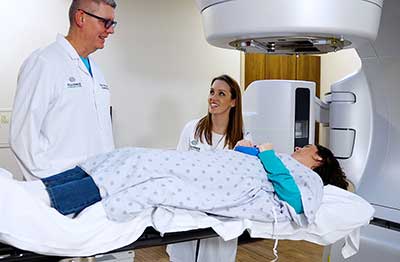 Radiation oncology is now part of the comprehensive cancer services offered at Clearview Cancer Institute. The physicians and care teams formerly practicing with Alliance Cancer Care now lead CCI’s Radiation Oncology Division, bringing decades of experience in advanced radiation therapy to patients throughout North Alabama.
Key Advantages of Radiation Therapy Treatments
- Outpatient procedure
- Accurately targets individual tumors
- Minimal radiation exposure to healthy tissue surrounding a tumor
What is Radiation Therapy?
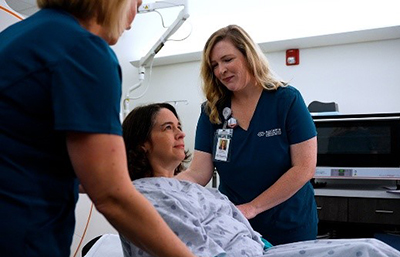 Physicians have safely and effectively used radiation therapy to treat cancer for more than 100 years. It is a very common and highly successful cancer treatment. Radiation therapy used alone or along with other treatments often leads to cancer remission. In more advanced cancers, radiation may improve a patient’s quality or length of life.
Radiation therapy uses high-energy particles or waves to destroy or damage cancer cells. Radiation kills cancer cells or slows their growth by damaging their DNA. When the DNA is damaged beyond repair, the cell stops dividing or dies. Dead cells are broken down and removed by the body. Non-cancerous cells in the area can also be affected by radiation, but most recover and continue functioning normally.
Choosing Radiation Treatment
There are two main types of radiation therapy, external beam and internal. The type of radiation therapy that you may have depends on many factors, including:
- The type and stage of cancer
- The size and location of the tumor
- The distance between the tumor and radiation-sensitive normal tissues
- Your age, medical history, and general health
- Other factors, such as your overall treatment plan and your radiation oncologist’s recommendations for you
EXTERNAL BEAM RADIATION THERAPY
External beam radiation therapy (EBRT) is the most common type of radiation therapy. Radiation is delivered from outside the body by a machine, called a linear accelerator or LINAC. The LINAC creates the radiation beam, and special computer software adjusts the beam’s size and shape, helping target the tumor and avoid healthy tissue near the cancer cells. EBRT is a local treatment, which means it treats a specific part of your body. For example, if the tumor is in your lung, the radiation will only be delivered to your chest.
INTERNAL RADIATION THERAPY
The radiation is usually delivered through an applicator placed in or near the tumor to deliver as few normal cells as possible. Like external beam radiation therapy, brachytherapy is a local treatment and treats only a specific part of your body.
Radiation Oncology Team
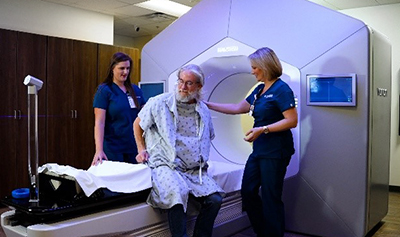 Our radiation oncology physicians work alongside medical oncologists and other specialists to create personalized treatment plans. A dedicated team of therapists, physicists, nurses, and coordinators ensures precise, compassionate care throughout treatment.
Radiation Oncologists
- Hoyt A. “Tres” Childs, III, MD
- Elizabeth Falkenberg, MD
- Harry James McCarty III, MD
- John Francis Gleason Jr, MD
- Ashlyn Seeley Everett, MD
- Richard Pearlman, MD
- Curtis Clark , M.D., Ph.D.
- Whitney Hotsinpiller, MD
Radiation Oncology Advance Practice Providers
- Kimberly Ellis, RN | Nurse Practitioner
- Sarah Patterson-Webb, RN | Nurse Practitioner
- Harmony Savage | Physician Assistant
Locations
- Clearview Cancer Institute – Russel Hill
- Crestwood
- Decatur
- Florence – Singing River Cancer Center
- Blackwell Medical Tower (Operated by Clearview Cancer Institute in partnership with Huntsville Hospital)
Patient Support
If you are interested in helping cancer patients with their financial assistance, all gifts are greatly appreciated. Your gift may be given in honor or memory of a loved one, and contributions are tax-deductible.
If you would like to contribute, please click here.